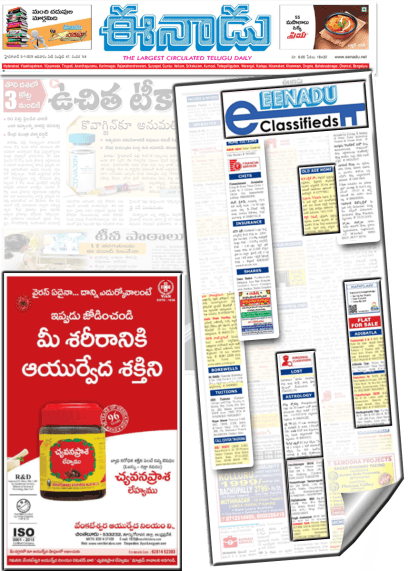
Regional language newspapers continue to hold remarkable influence in India, shaping how communities communicate, share opportunities, and stay informed in their own language. Their deep cultural connection and local relevance make them an essential medium for both personal and commercial announcements. In this context, an Eenadu classified advertisement becomes a powerful tool, offering direct access to a loyal Telugu-speaking readership that actively engages with the newspaper for trusted and meaningful information.
Since its inception in 1974 under the leadership of Ramoji Rao, Eenadu has grown into one of the most respected names in regional journalism. Its commitment to delivering accurate, relevant, and community-focused news has earned it a strong bond with readers across Andhra Pradesh and Telangana. This credibility naturally extends to its classified section, where advertisements are viewed with a high degree of trust and seriousness, making them far more effective in generating responses.
One of the key strengths of advertising in Eenadu lies in its extensive network of editions that cover both major cities and smaller districts. From Hyderabad and Visakhapatnam to Vijayawada, Tirupati, and Warangal, the newspaper ensures that advertisements reach audiences in locations where they matter the most. This localised reach enhances the relevance of each classified ad, allowing advertisers to connect with the right audience based on geography, preference, and need.
The classifieds section itself caters to a wide range of requirements, including matrimonials, property listings, recruitment notices, business promotions, and public announcements. Readers often turn to these pages with clear intent, which increases the likelihood of meaningful engagement. The structured format of classifieds ensures that messages remain concise yet impactful, allowing advertisers to communicate essential details effectively within limited space.
Booking a classified ad in Eenadu has become increasingly convenient with the availability of digital platforms. releaseMyAd simplifies the entire process by enabling users to create, preview, and schedule their advertisements from the comfort of their homes. The platform offers expert guidance in selecting the right category, crafting effective content, and choosing suitable publication dates. With secure payment options and responsive customer support, advertisers can complete their bookings with confidence and ease.
The flexibility offered in terms of ad formats and enhancements further adds to the appeal of Eenadu classifieds. Advertisers can choose from basic text listings to visually highlighted options that draw greater attention. This adaptability ensures that both individuals and businesses can design their ads according to their budget while still achieving strong visibility in a competitive space.
Eenadu classifieds continue to stand out as a reliable and impactful medium for reaching a targeted regional audience. Their combination of credibility, local reach, and structured presentation makes them an excellent choice for anyone looking to share important information with clarity and confidence. Those planning to make an announcement or promote an opportunity can take the next step by booking through releaseMyAd today and ensure their message reaches the right audience at the right time.
Hindi language newspapers have long played a defining role in shaping communication across India, especially in regions where readers rely on their mother tongue for daily news and public discourse. Within this space, Nai Dunia classified has earned a distinct identity as a dependable channel for individuals and businesses to share announcements that matter. With its strong roots in central India, the newspaper continues to serve as a bridge between readers and advertisers, ensuring messages reach households that value credibility, clarity, and regional relevance.
Established in 1947 by Babu Labhchand Chhajlani in Indore, Nai Dunia began its journey alongside India’s independence, reflecting the aspirations of a newly awakened nation. The publication was founded with the vision of giving the Hindi-speaking population a strong, responsible voice in journalism. Over the years, Nai Dunia expanded its presence across key cities such as Bhopal, Raipur, Jabalpur, Gwalior, and Bilaspur, steadily strengthening its reputation as one of the most trusted Hindi dailies in Madhya Pradesh and Chhattisgarh. Its consistent editorial values and community-focused reporting have transformed it into a household name across central India.
What truly sets Nai Dunia apart is its close connection with its readers. The newspaper mirrors the everyday realities, achievements, and concerns of local communities while balancing regional stories with national developments and thoughtful editorials. For many families, reading Nai Dunia is a daily habit that reinforces their connection to society and local affairs. This deep-rooted trust makes the publication an effective medium for advertisers who wish to communicate with audiences that are attentive, loyal, and engaged.
The classified section of Nai Dunia holds particular importance for readers seeking practical information. From matrimonial announcements and job vacancies to property listings, services, and official notices, the section addresses a wide range of everyday needs. Readers place high value on print classifieds for their authenticity and seriousness, which translates into strong visibility and response for advertisers. This reliability ensures that messages published in Nai Dunia classifieds are noticed, read carefully, and acted upon.
Booking a classified advertisement in Nai Dunia is now simpler than ever with the support of releaseMyAd. This online platform streamlines the entire process by allowing advertisers to choose the appropriate category, draft their advertisement using easy templates, preview how it will appear in print, and complete payment securely online. The need for physical visits or multiple intermediaries is eliminated, saving both time and effort. With transparent pricing, professional assistance, and assured value, releaseMyAd makes advertising accessible to everyone.
By using releaseMyAd, advertisers combine the strong regional influence of Nai Dunia with the convenience of modern digital booking. Whether you are an individual sharing a personal announcement or a business promoting its offerings, classified ads in Nai Dunia gain the advantage of precise reach and lasting impact. The platform ensures that your advertisement is placed correctly and published smoothly, helping you connect with the audience that matters most.
Take the next step toward effective communication by booking your Nai Dunia classified ad through releaseMyAd today. Share your message with confidence and let it reach readers across central India through a newspaper that continues to stand for trust, relevance, and community connection.
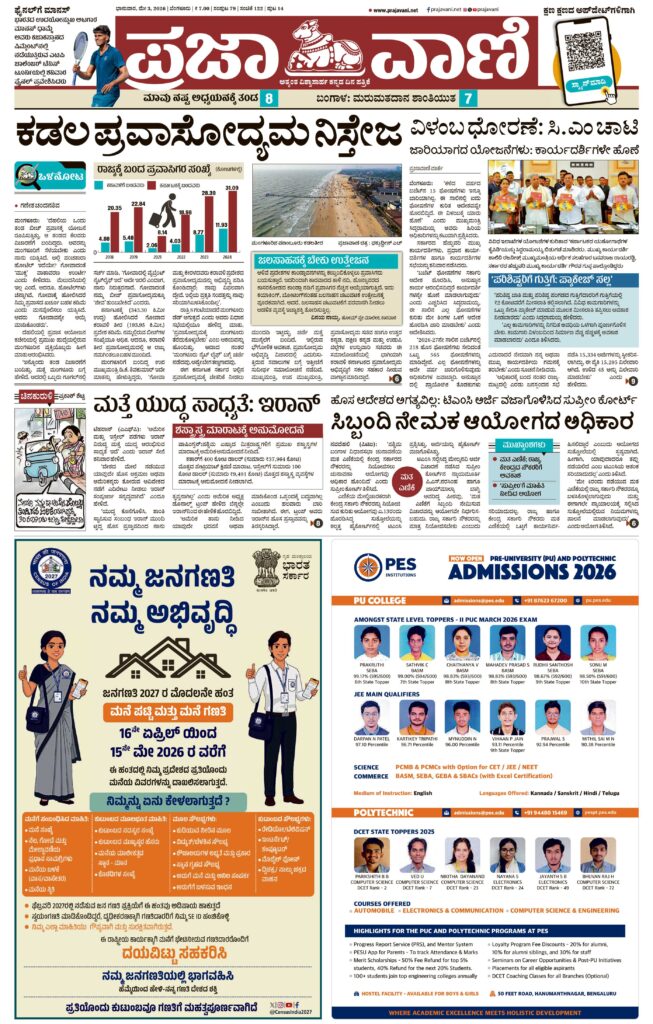
In a world filled with countless advertising options, few platforms manage to capture attention with both relevance and reliability. Prajavani classified ads have steadily built a reputation for doing exactly that, offering a space where messages reach readers who are genuinely interested and engaged. Rooted in the strength of regional language communication, these classifieds connect advertisers with Kannada-speaking audiences in a way that feels direct, familiar, and impactful.
Regional newspapers in India have long been at the heart of community communication, and Prajavani stands as a shining example of this legacy. Established in 1948 by The Printers (Mysore) Private Limited, the newspaper emerged during a time when regional voices were gaining prominence in independent India. Headquartered in Bengaluru, Prajavani has consistently upheld its commitment to responsible journalism and public expression. Its name, meaning “Voice of the People,” reflects its enduring mission to represent and inform society with honesty and clarity. Over the decades, the publication has grown significantly, reaching a daily circulation of more than 5,58,000 copies and an estimated readership exceeding two million, spanning both urban and rural regions of Karnataka.
The growth of Prajavani is closely tied to the trust it has cultivated among its readers. Its editorial content covers a wide spectrum, including regional developments, national and international affairs, and in-depth reporting on politics, agriculture, education, business, and culture. Regular opinion columns and reader interactions further strengthen its bond with audiences, ensuring that the newspaper remains relevant across generations. This strong editorial foundation creates an environment where advertisements are not overlooked but instead receive genuine attention from readers who value the publication.
The popularity of classifieds within Prajavani is a natural extension of this trust. Readers often turn to these sections with clear intent, whether they are searching for matrimonial matches, job opportunities, property listings, or essential services. This purposeful engagement makes classified advertising highly effective, as messages are delivered to an audience that is already interested and responsive. The affordability and simplicity of classifieds further contribute to their appeal, allowing both individuals and businesses to communicate efficiently without compromising on reach.
Modern advertising needs demand convenience alongside effectiveness, and this is where releaseMyAd plays a crucial role. The platform has transformed the way advertisers approach newspaper advertising by offering a seamless online experience. Users can create and customise their ads, select suitable categories and editions, review transparent pricing, and schedule publication dates with ease. With reliable support and a user-friendly interface, releaseMyAd ensures that the entire process remains smooth and hassle-free from start to finish.
The continued success of Prajavani classifieds highlights the enduring relevance of regional newspapers in a rapidly evolving media landscape. Their ability to deliver targeted communication, backed by credibility and reader trust, keeps them at the forefront of effective advertising solutions. For those looking to connect with Kannada-speaking audiences, Prajavani classifieds provide a dependable and result-oriented platform that continues to grow in popularity.
Take the next step today by booking your advertisement through releaseMyAd and experience how Prajavani can help your message reach the right audience with clarity and impact.
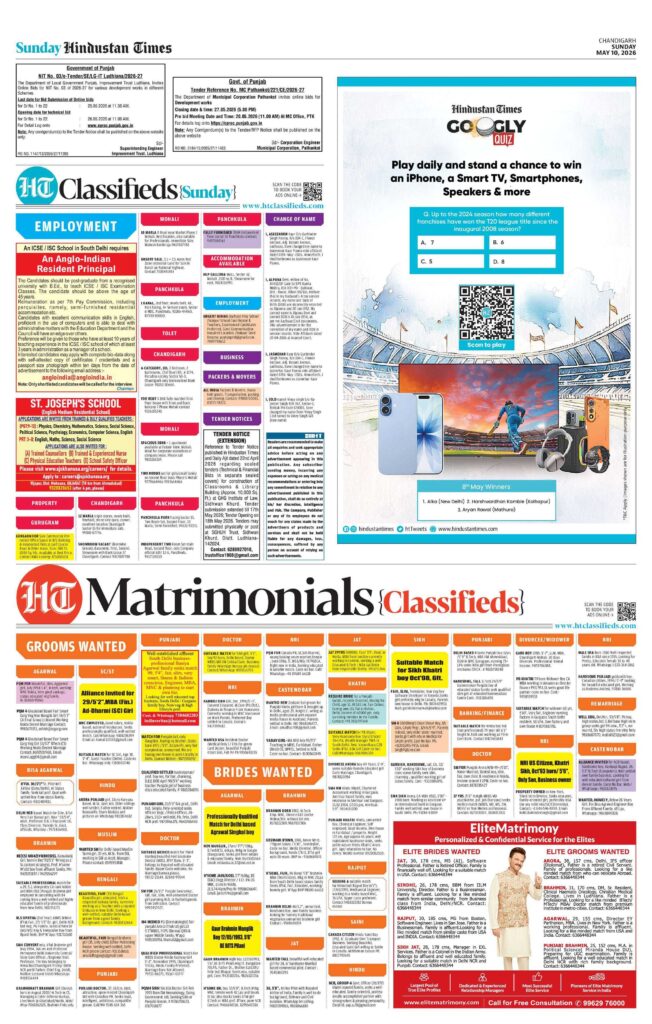
Choosing where to publish a newspaper classified ad is not just about brand recognition. It is about understanding the specific strengths a publication brings to your purpose and being aware of where it falls short. Hindustan Times is one of India’s leading English-language newspapers, and its classified section serves a wide range of advertisers. But like any platform, it works better for some use cases than others. This article looks at the strengths and limitations of Hindustan Times classified advertising so you can plan your campaign with clear expectations.
Strength 1: Established Readership Across Seven Editions
Hindustan Times prints from seven primary editions, each with its own circulation footprint. Delhi leads with around 8.4 lakh copies in circulation, followed by Mumbai with 6.5 lakh, Chandigarh with 1.79 lakh, Pune with 37,000, Lucknow with 26,982, Patna with 16,598, and Jaipur with 12,776. Together, the editions cross 10 lakh copies in daily circulation. For advertisers, this means a classified ad in HT reaches a significant urban readership across both metros and tier-two cities, with particularly strong density in Delhi-NCR and the broader North Indian belt.
Strength 2: Trusted English Daily for Credibility-Sensitive Ads
Some advertisements depend on the credibility of the publication itself. Public notices, court notices, name change declarations, and tender announcements all carry more weight when published in an established English daily. Hindustan Times, founded in 1924, has built that credibility over a century. For legal professionals, government bodies, and institutions that need a recognised platform, HT is among the small set of newspapers that meet the requirement comfortably.
Strength 3: A Comprehensive Range of Categories
HT classifieds covers more than twenty distinct categories, each tailored to a specific advertising purpose. These include matrimonial, property, recruitment, business, personal, vehicles, services, change of name, lost and found, public notice, court notice, obituary, remembrance, education, retail, travel, astrology, marriage bureau, wedding arrangements, tenders, situation wanted, and more. This range means advertisers across very different needs can use a single platform, and readers searching within a specific category find ads that are relevant to them.
Strength 4: Themed Supplements for Better Targeting
Hindustan Times runs several themed supplements that complement its classified categories. HT Estates focuses on real estate, HT Shine on jobs and recruitment, HT City on entertainment and lifestyle, HT Education on academic content, and HT Cafe in the Mumbai edition. Advertisers can pair their classified booking with the relevant supplement to reach a more focused audience. A property listing alongside HT Estates, for example, sits within content that property-seeking readers are already engaging with.
Strength 5: Online Booking with Discounts
Booking through releaseMyAd’s Hindustan Times classified page gives advertisers access to package deals and discounts that can reduce campaign costs by up to 50 per cent compared to standard rates. The online booking flow takes three steps: select ad type, category, and location; compose the ad with a live preview; and choose dates and complete payment. An instant invoice and confirmation follow.
Limitation 1: English-Only Reach
Hindustan Times publishes only in English. While this is a strength for English-speaking urban audiences, it is a clear limitation when the target audience is more comfortable with Hindi, Punjabi, Marathi, or another regional language. For ads aimed at semi-urban or rural readers, or specific community groups that prefer regional language papers, HT may not deliver the response rate of a vernacular daily. Many advertisers handle this by combining HT with a regional language newspaper to cover both audiences.
Limitation 2: Edition-Wise Pricing Variations
HT’s per-line rates vary significantly between editions because they are tied to circulation. A 5-line classified text ad costs around ₹1100 in Delhi, ₹900 in Mumbai, ₹625 in Chandigarh, ₹500 in Pune and Lucknow, ₹400 in Patna, and ₹250 in Jaipur. Multi-edition campaigns therefore need careful budgeting, and the per-edition cost can add up quickly if an advertiser wants pan-India coverage. Multi-city package deals help, but pricing is not uniform across the seven editions.
Limitation 3: Format Constraints in Text Ads
Classified text ads run as plain running text. Enhancements such as a tick mark, border, bold formatting, or background colour can be added at a small extra charge, but you cannot include logos, photographs, or detailed graphics. For ads that depend on visual appeal, such as some property listings, retail promotions, or wedding-related ads, the classified display format is needed. Display ads are charged on a per square centimetre basis, which makes them more expensive than text ads.
Limitation 4: Booking Deadlines
HT classifieds have a standard booking deadline of one day prior to the publication date. This works for most planned advertisements, but it does not allow for same-day publication. Some categories may have slightly different deadlines, and Sunday editions are particularly busy because of high matrimonial volume. Advertisers booking Sunday ads should plan a few days ahead to ensure their preferred slot is available.
Limitation 5: Regional Concentration
Hindustan Times has a national presence, but its strength is concentrated in North India. Editions exist in Mumbai and Pune, but the newspaper does not have the same depth of readership in southern or eastern India that it has in Delhi, Chandigarh, Lucknow, or Jaipur. For advertisers seeking pan-India reach, HT typically needs to be combined with newspapers that lead in those regions.
How to Plan Around the Limitations
The limitations are not deal-breakers; they are factors to plan around. If your audience is multilingual, pair HT with a regional language daily. If your campaign is multi-edition, build the budget around the actual per-edition rates rather than a flat estimate. If you need visual creative, choose the classified display format. If your timeline is tight, book ahead of the one-day deadline. With these adjustments, HT delivers strong results within its zone of strength.
Conclusion
Hindustan Times classified advertising offers genuine strengths in reach, credibility, category coverage, and ease of booking, particularly for English-reading urban audiences in North India. It also has clear limitations in language coverage, regional spread, and format flexibility. The right approach is to match your campaign’s needs with HT’s strengths, plan for the limitations, and use the platform where it delivers the best return. Done well, an HT classified ad can be one of the most effective parts of a broader newspaper advertising plan.
Long before the rise of digital platforms, newspapers established themselves as a trusted space where information and opportunity came together in a structured and reliable format. Within this ecosystem, the newspaper classified advertisement emerged as a simple yet powerful way for individuals and businesses to communicate directly with a wide audience. Over time, these small, focused ads became an essential part of daily reading, helping people find jobs, homes, services, and even life partners with clarity and confidence.
The evolution of newspapers as an advertising medium is closely tied to their role in society. As readership expanded across regions and languages, newspapers became a dependable channel for sharing both news and commercial information. Classified sections developed naturally as readers began to seek specific information in an organized format, creating a space where intent-driven browsing became the norm. This structure has remained largely unchanged because it works effectively, allowing readers to quickly locate relevant listings while giving advertisers a direct path to their target audience.
One of the strongest reasons for the continued relevance of newspaper advertising is the credibility it carries. Readers approach newspapers with a sense of trust, often dedicating time to read through pages carefully rather than skimming content. This environment encourages deeper engagement, which benefits advertisers significantly. When a message appears within a trusted publication, it inherits a level of authenticity that is difficult to replicate elsewhere, making it more likely to be noticed, remembered, and acted upon.
The organized nature of classified sections further strengthens their effectiveness. Readers actively turn to these pages with a clear purpose, whether they are searching for employment opportunities, property listings, or essential services. This intent-driven behavior ensures that advertisements are not just passively viewed but actively explored. At the same time, newspapers offer cost-effective options that make advertising accessible to a wide range of users, from individuals placing personal notices to businesses running targeted campaigns.
Despite the rapid growth of digital media, newspapers continue to hold their ground by offering a focused and distraction-free reading experience. Many readers still prefer the discipline of print, where content is consumed without constant interruptions. This calm and deliberate engagement allows advertisements to stand out and leave a lasting impression. The availability of e-papers has further extended this reach, enabling advertisers to connect with both traditional and digital audiences through a single platform.
The process of placing ads has also evolved to match modern expectations, becoming faster and more convenient through digital solutions. releaseMyAd has simplified the entire experience by offering an easy-to-use online platform where advertisers can browse publications, select categories, and create ads without unnecessary complications. The platform provides transparent pricing, expert assistance with ad content, and secure payment options, ensuring that every step is handled efficiently. With access to a wide network of leading newspapers, releaseMyAd makes it possible to plan and execute campaigns with confidence and ease.
Choosing newspaper classified ads through releaseMyAd combines the reliability of a time-tested medium with the convenience of modern technology. It allows advertisers to reach the right audience with precision while maintaining complete control over their campaign details, timelines, and budgets. This seamless integration of tradition and efficiency continues to make newspaper advertising a dependable choice for meaningful communication.
Take the next step toward effective and trusted advertising by placing your newspaper classified ad through releaseMyAd today and connect with audiences who are ready to engage with your message.