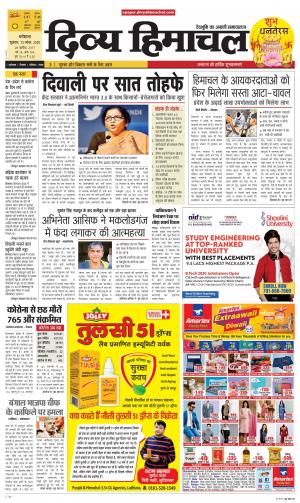

Mid Day Newspaper Advertisement: Put Your Brand in Mumbai’s Daily Spotlight

Mumbai’s cosmopolitan audience is known for its fast pace, diverse interests, and strong connection to reliable daily news. From business professionals and entrepreneurs to students, homemakers, and entertainment followers, the city looks for media that reflects its energy and speaks its language. This is where Mid Day has built a remarkable presence over the decades, becoming a trusted companion for urban readers who value concise reporting and relevant city coverage. Midday advertising holds special value in such an environment because brands and individuals can communicate directly with readers who are active, informed, and ready to respond.

Launched in 1979 by Khalid Ansari, Mid Day entered the newspaper market with a fresh and practical approach that matched Mumbai’s busy lifestyle. At a time when commuters needed quick yet meaningful updates, the publication offered a compact format filled with sharp journalism, city news, and engaging features. It quickly earned popularity among office-goers, train travellers, and readers who wanted information without unnecessary delay. Over time, Mid Day strengthened its reputation by consistently focusing on Mumbai’s local pulse while also covering national developments and lifestyle trends that mattered to its audience.

The growth story of Mid Day reflects its ability to evolve with changing reader expectations. What began as a city-focused daily gradually expanded into one of Mumbai’s most recognised English newspapers. Its coverage of civic matters, neighbourhood issues, sports, Bollywood, food, fashion, health, and culture helped it connect with multiple generations of readers. As digital media transformed consumption habits, Mid Day adapted successfully by expanding its online presence while maintaining the trust associated with its print edition. Today, under Jagran Prakashan Ltd., the newspaper continues to remain relevant through a combination of dependable reporting and modern accessibility.

Advertise in Midday Newspaper

One of the strongest advantages of advertising in Mid Day is the quality of its readership. The paper reaches a concentrated urban audience that values credibility and pays attention to content. Whether a business wants to promote products, announce offers, recruit talent, launch real estate projects, or publish personal classifieds, Mid Day offers an effective platform. Its reader-friendly format helps advertisements stand out, increasing the possibility of genuine engagement in a city where attention is always in demand.

Booking your advertisement becomes even easier through releaseMyAd, India’s leading online newspaper ad booking platform. The service is designed to simplify the complete process, allowing users to choose ad categories, select publication dates, review layouts, and make secure payments from anywhere. Expert support is available for wording, formatting, and placement, ensuring that every campaign is handled professionally. For anyone planning a Midday newspaper advertisement, releaseMyAd guarantees the best rates for advertising in Mumbai through Mid Day, making quality visibility more affordable and convenient.

Mid Day remains one of the smartest choices for reaching Mumbai through a trusted and widely read publication. With releaseMyAd as your booking partner, the process becomes smooth, quick, and cost-effective. Book your Mid Day newspaper advertisement today and connect your message with Mumbai’s dynamic audience.

Navhind Times Advertisement: Connect with Goa Through a Respected Voice

A powerful message deserves an audience that listens, and few platforms offer that advantage like a well-placed Navhind Times advertisement. For businesses, institutions and individuals aiming to connect with readers who value credibility and relevant news, newspaper advertising continues to deliver dependable visibility. In Goa and surrounding regions, The Navhind Times remains a respected name that gives announcements, promotions and important notices the attention they deserve.

English newspapers in India continue to shape public awareness, encourage thoughtful discussion and keep communities informed about developments in business, governance and culture. Within this space, The Navhind Times holds a distinguished position as Goa’s first English daily newspaper. It was launched on February 18, 1963, by the Dempo Brothers of the House of Dempos soon after Goa’s liberation from Portuguese rule. Established in Panaji, where its headquarters remain today, the newspaper emerged during an important period when readers were seeking reliable and relevant journalism.

Advertise in Navhind Times

Over the decades, The Navhind Times has closely followed Goa’s changing social, political and economic journey while steadily strengthening its readership. With a daily circulation of more than 56,000 copies, the publication reaches homes and workplaces across Goa and extends into neighbouring parts of Maharashtra and Karnataka. It also connects with subscribers in other parts of India and overseas. Known for dependable reporting, thoughtful editorial content and engaging feature coverage, the newspaper has maintained its trusted reputation for more than six decades.

For advertisers, that trust creates real value. Readers are more likely to notice and respond to promotions that appear in a publication they respect. The Navhind Times offers strong potential for brands seeking to reach professionals, families, entrepreneurs, decision-makers and engaged local readers. Whether the purpose is promoting a product, launching a service, publishing a recruitment notice or announcing an event, the newspaper provides a strong setting for meaningful communication.

Booking ad space is now far simpler through releaseMyAd, one of India’s leading online newspaper advertising platforms. The service allows advertisers to browse ad categories, compare rates, choose editions, select formats and complete bookings through an easy digital process. Customers can also receive support with ad drafting, scheduling, artwork preparation and publication requirements. This combination of convenience and expert assistance helps both first-time advertisers and experienced marketers complete campaigns smoothly.

Those planning a campaign can use releaseMyAd to secure placements quickly while keeping control over budget and deadlines. From personal announcements and Navhind Times classified ads to bold display campaigns designed for maximum visibility, the platform makes it easier to access the newspaper’s valuable readership with speed and transparency.

This is an excellent moment to place your message before one of Goa’s most respected audiences. Visit releaseMyAd today, explore your options and book your advertisement to connect with readers through the reach of The Navhind Times.

Deccan Herald Ad: Give Your Message the Power of a Prestigious Platform

Some messages deserve more than ordinary attention, and a well-placed Deccan Herald ad offers exactly that advantage. For businesses seeking stronger brand presence, professionals announcing opportunities, and individuals sharing important notices, newspaper advertising continues to be a powerful medium. Among India’s leading English dailies, Deccan Herald stands apart for its respected identity, influential readership and lasting impact across southern India and beyond.

English journalism in India has long served as a vital bridge between readers and the events shaping society, economy and public life. Within this tradition, Deccan Herald has secured a distinguished place since its founding in 1948 by K. N. Guruswamy. Published by The Printers Mysore, the newspaper emerged during an important period in independent India when readers sought dependable reporting and thoughtful commentary. Headquartered in Bengaluru, Deccan Herald developed alongside the city’s rise as an educational, technological and cultural centre, becoming deeply connected with Karnataka’s progress while maintaining a broad national perspective.

Advertise in Deccan Herald Newspaper

Over the decades, the newspaper expanded steadily through strong editorial values, consistent reporting standards and a clear understanding of reader interests. Often recognised as the “Voice of Karnataka,” Deccan Herald built loyalty among readers who appreciated balanced journalism, serious analysis and relevant coverage. As Bengaluru transformed into one of India’s most dynamic metropolitan centres, the newspaper also grew in stature, extending its influence across Karnataka and into neighbouring states. Its evolution from a respected regional daily into a widely recognised national publication reflects decades of credibility and commitment.

Today, Deccan Herald reaches a vast audience through its print presence and digital platforms, connecting with readers across cities, towns and professional communities. Its circulation and readership span key urban centres, making it highly valuable for advertisers who want visibility among educated and decision-making audiences. The newspaper attracts professionals, entrepreneurs, families, students and informed citizens who engage regularly with current affairs and business developments.

A major reason for this reach is the newspaper’s wide-ranging content. Deccan Herald covers politics, governance, business, markets, sports, technology, lifestyle, culture and international affairs with clarity and depth. Its editorial pages and opinion features further strengthen reader engagement by presenting informed perspectives and meaningful debate. This combination of news value and reader loyalty creates an ideal environment for advertisements to be noticed and remembered.

For advertisers, the benefits are substantial. Classified and display ads in Deccan Herald can serve many purposes, from promoting brands and announcing offers to publishing recruitment notices, property listings, educational admissions and personal messages. Because the newspaper is actively read each day, advertisements gain relevance as well as reach, helping messages connect with the right audience.

Booking ad space has become far easier with releaseMyAd, one of India’s leading online newspaper advertising platforms. Through a simple digital process, users can choose editions, compare rates, select ad categories, upload content, preview layouts and complete secure payments online. The platform also provides professional assistance with ad drafting, scheduling, artwork support and publication requirements, making the experience smooth for both first-time and regular advertisers.

Anyone planning a campaign can rely on releaseMyAd for an efficient and budget-friendly route to publish a Deccan Herald advertisement. With transparent pricing, responsive support and access to competitive rates, the platform allows advertisers to focus on creating the right message while ensuring timely placement in a respected newspaper.

Now is the perfect time to place your message before one of India’s most valued English newspaper audiences. Visit releaseMyAd today, book your ad with ease and connect with readers through the enduring reach of Deccan Herald.

Why Mathrubhumi Matrimonial Ads Still Outperform Online Matchmaking for Kerala Families

In an age dominated by matrimony apps, swipe-based platforms, and online profiles, it is easy to assume that traditional newspaper matrimonial advertisements have lost their relevance. Yet for Kerala families, both within the state and across the Gulf, a Mathrubhumi matrimonial advertisement continues to be one of the most trusted and effective ways to find a suitable bride or groom. Understanding why requires looking beyond technology and into the cultural fabric of the Malayali community.

Mathrubhumi has been part of Kerala’s daily life since 1923. With a circulation of over 1.48 million copies and a readership base that spans households across Kerala, the metros, and the Middle East, the newspaper holds a position that no app has been able to replicate.

The Trust Factor That Apps Cannot Replace

Mathrubhumi Matrimonial Ad

Online matchmaking platforms have grown rapidly, but they often struggle with the same problem: verifying authenticity. Profiles can be fake, photos can be misleading, and the volume of unfiltered matches can overwhelm families who are looking for serious alliances.

Mathrubhumi matrimonial ads work differently. When a family chooses to invest in a printed advertisement, the act itself signals seriousness. Readers know that the family has taken time to compose the ad, paid for its publication, and put their preferences in writing. This filtering happens before the first response even arrives.

Reach That Goes Beyond a Smartphone Screen

A common assumption is that newspapers reach a smaller audience than digital platforms. In Kerala, this is not the case. The Mathrubhumi Sunday matrimonial column is read across multiple generations within the same household, which is exactly the audience that arranged marriages depend on.

With editions published from Kozhikode, Thrissur, Kannur, Trivandrum, Kochi, Kollam, Palakkad, Kottayam, Alappuzha, and Malappuram in Kerala, plus Bangalore, Chennai, Mumbai and even Dubai, a single ad can travel through the entire Malayali community. This is particularly important when families consider proposals from relatives, family friends, and community elders, all of whom continue to read the printed paper on Sundays.

Family Networks Still Drive Matchmaking in Kerala

Arranged marriages in Kerala continue to rely heavily on extended networks. Aunts, uncles, neighbours, and community members all participate in the matchmaking process. These individuals are far more likely to pass along a printed matrimonial ad than to scroll through an app on someone else’s behalf.

A Mathrubhumi matrimonial advertisement effectively turns into a community-wide announcement. It travels from the breakfast table to the office canteen, from the temple notice board discussion to a phone call with a relative in Dubai. This kind of organic, trusted distribution is something digital platforms find hard to engineer.

The Right Format for Detailed Preferences

Indian matrimonial preferences are often layered. Families may want to specify community, sub-caste, religion, profession, education, height, age range, astrological details, and more. Mathrubhumi’s classified format, available as both text classified ads and display classified ads, accommodates these details cleanly.

Display classified ads can include borders, colour highlights, and even logos, which is useful for families who want their ad to stand out. Text classified ads, charged on a per-word basis, are budget-friendly and ideal for shorter, more direct messages. The choice of format gives families control that generic profile templates online do not allow.

A Format Built Around Sunday Reading Habits

Sunday is the day Mathrubhumi publishes its matrimonial section, and Sunday is also the day when most Malayali families spend more time at home, reading the paper together. This timing is not coincidental. The matrimonial column has become a weekly ritual for many families looking to find or recommend matches.

Booking deadlines are typically two days prior to the Sunday release, giving families enough time to draft, refine, and finalise their advertisement copy. Compared to the constant updates and pressure of online matchmaking, this rhythm feels more measured and intentional.

Combining Tradition With Online Convenience

The reason Mathrubhumi matrimonial ads continue to thrive is not because families are resistant to technology. It is because the trust and reach of print, when combined with the convenience of online booking, gives families the best of both worlds. Through platforms like releaseMyAd, families can now book Mathrubhumi matrimonial advertisements online from anywhere in the world, choose their preferred edition or discount package, compose the ad, and confirm the release date, all without visiting a newspaper office.

This means a family in Kochi, a parent in Trivandrum, or a sibling working in Dubai can all collaborate on the same matrimonial advertisement, choosing the edition mix that best suits their search.

Conclusion

A Mathrubhumi matrimonial advertisement is not just an old-fashioned alternative to apps. It is a deeply rooted, community-trusted method of matchmaking that continues to deliver genuine, serious responses for Kerala families. Online matchmaking has its place, but for families who value tradition, credibility, and reach across both Kerala and the diaspora, Mathrubhumi remains a strong first choice. Booking is now simpler than ever, and the printed Sunday classified column still does what apps often cannot: bring the right families together.

Why Dainik Jagran Classified Ads Work in the Hindi Belt: A Reach Guide

A Dainik Jagran classified ad reaches an audience that very few other Indian publications can match — the Hindi-speaking heartland of the country, spread across small towns, district headquarters, and metro cities. The newspaper is not just one of many Hindi dailies; in much of its core geography, it is the first paper that families pick up in the morning. That readership pattern is what gives a Dainik Jagran classified ad its reach.

This guide explains where Dainik Jagran is strongest, why its readership concentration matters for classified advertisers, and how to read the per-edition circulation data to plan an ad that lands in the right place.

What “Hindi Belt” Means for an Advertiser

The Hindi belt is not a single market. It is a stretch of states — Uttar Pradesh, Bihar, Jharkhand, Uttarakhand, Madhya Pradesh, Chhattisgarh, Rajasthan, Haryana, Himachal Pradesh, Delhi — where Hindi is the dominant first language but where reading habits, household sizes, and consumption patterns vary widely city by city. An advertiser planning a Hindi-belt campaign is not reaching one audience; they are reaching dozens of overlapping ones.

Advertise in Dainik Jagran

Dainik Jagran covers the eastern and northern parts of this belt particularly well. Its 26+ city editions are concentrated in UP, Bihar, Jharkhand, Uttarakhand, and adjacent regions of Punjab, Haryana, Delhi, and Himachal Pradesh. For a classified advertiser, this concentration is what makes the newspaper an efficient choice — the readers it reaches are the readers who matter for a Hindi-belt campaign.

Reading the Per-Edition Circulation Data

Circulation numbers are the cleanest way to compare editions. Higher circulation generally means more potential readers, but the more useful question is how circulation is distributed across cities — because that distribution decides where a classified ad will be most visible.

Tier 1 Editions: Above 3 Lakh Copies

  • Delhi — 4,62,502 copies in circulation.
  • Lucknow — 4,19,391 copies.
  • Kanpur — 4,02,454 copies.
  • Varanasi — 3,49,103 copies.
  • Meerut — 3,01,804 copies.

These five editions together circulate close to 20 lakh copies daily. For broad-reach categories — recruitment for large workforces, matrimonial campaigns, big-ticket public notices — these are the editions that drive the bulk of the response.

Tier 2 Editions: 1 Lakh to 3 Lakh Copies

  • Patna — 2,46,341 copies.
  • Gorakhpur — 1,74,780 copies.
  • Bhagalpur — 1,56,815 copies.
  • Muzaffarpur — 1,54,321 copies.
  • Agra — 1,50,190 copies.
  • Allahabad — 1,38,044 copies.
  • Bareilly — 1,22,729 copies.
  • Dehradun — 1,18,763 copies.

Tier 2 editions cover the regional and district-level geography that Tier 1 alone misses. For property ads, school admissions, regional retail, and community-specific matrimonial searches, these editions are often more relevant than the metros — the readers are local, and the response is local too.

Tier 3 Editions: Below 1 Lakh Copies

  • Moradabad — 96,201 copies.
  • Jhansi — 82,425 copies.
  • Hisar — 79,646 copies.
  • Aligarh — 72,010 copies.
  • Ludhiana — 67,285 copies.
  • Nainital — 66,262 copies.
  • Dhanbad — 65,138 copies.
  • Jamshedpur — 55,997 copies.
  • Panipat — 46,967 copies.
  • Ranchi — 43,996 copies.
  • Jalandhar — 42,045 copies.
  • Siliguri — 21,536 copies.
  • Jammu and Kashmir — 18,683 copies.
  • Dharamshala — 11,474 copies.

Tier 3 editions cost the least and reach the most narrowly defined audiences. They are best used when the geography of the ad is specific — a notice about a property in Aligarh, a recruitment ad for a Panipat factory, a wanted-bride ad for a family in Nainital.

How Reach Translates to Response

A common assumption is that response volume scales linearly with circulation. It does not. A few practical effects shape how a Dainik Jagran classified ad actually performs:

  • Pass-along readership — a single Dainik Jagran copy is often read by multiple family members, particularly in joint households across the Hindi belt. Effective readership tends to be considerably higher than circulation figures alone suggest.
  • Section habits — readers in different cities use the classifieds section differently. Lucknow readers, for example, are known for using the Sunday matrimonial pullout heavily, while Patna readers may engage more with the recruitment and public-notice columns.
  • Local context — an ad placed in a small-circulation edition often reaches a more focused audience than the same ad in a large-circulation metro edition, because the reader is more likely to find the ad locally relevant.

What this means in practice is that a classified advertiser is rarely better off chasing total circulation alone. The right edition for a particular ad is the one whose readers are most likely to act on it — and that depends on the ad’s purpose more than on the raw number of copies printed.

Matching Reach to Ad Purpose

Broad-Reach Ads

For matrimonial, recruitment, and large-scale public notices, layering Tier 1 editions with one or two Tier 2 editions usually delivers the best balance of reach and cost. The Tier 1 editions provide volume; the Tier 2 editions extend the geography into adjacent regions.

Geography-Specific Ads

For property notices, lost-document advertisements, change-of-name announcements, and regional recruitment, a single Tier 2 or Tier 3 edition often suffices. The cost is much lower, and the audience is more relevant than a Tier 1 metro insertion.

Legal Notices with Wide Stakeholder Geography

Legal notices with stakeholders across multiple cities benefit from a Tier 1 edition for general publication plus relevant Tier 2 or Tier 3 editions for the specific cities where stakeholders are likely to live.

Confirming Edition Rates and Circulation

The complete list of Dainik Jagran editions with current circulation figures and tariffs is available on the Dainik Jagran classified ad booking page on releaseMyAd. Circulation data is provided edition-wise, which makes it easier to plan a campaign around real reach rather than assumptions. Multi-edition discount packages are typically applied at the time of booking when more than one edition is selected together.

Frequently Asked Questions

Is Dainik Jagran the largest Hindi daily in India?

Dainik Jagran is one of the most widely read Hindi-language daily newspapers in India, with strong circulation across UP, Bihar, Jharkhand, Uttarakhand, and Delhi. It competes closely with other major Hindi dailies in different markets.

Does higher circulation always mean a better Dainik Jagran classified ad result?

Not necessarily. Higher circulation increases the number of potential readers, but the right edition for a classified ad is the one where readers are most likely to find the ad relevant. For geography-specific ads, a smaller edition in the right city often outperforms a larger edition in the wrong one.

How is circulation different from readership?

Circulation refers to the number of newspaper copies printed and distributed, while readership refers to the number of people who actually read those copies. In Hindi-belt households, a single copy is often read by multiple family members, so effective readership tends to be higher than circulation alone suggests.

Which Dainik Jagran editions cover Bihar and Jharkhand?

For Bihar, the main editions are Patna, Bhagalpur, and Muzaffarpur. For Jharkhand, the editions are Ranchi, Jamshedpur, and Dhanbad. A classified ad covering Bihar and Jharkhand is usually built by combining two or three of these editions.